Vinyasa Yoga Teacher Certification in Bangalore: Learn, Practice & Teach
Bangalore functions as a primary centre for professional yoga instruction and physical conditioning. The city hosts multiple training facilities that evaluate and certify instructors according to strict anatomical and philosophical standards. This creates a structured environment for practitioners who want to deepen their practice and develop the skills needed to teach others.
Earning a vinyasa yoga teacher certification in Bangalore requires candidates to complete a structured curriculum consisting of physical postures, respiratory control, and anatomical science. This specific certification qualifies individuals to conduct professional classes and manage student safety in commercial fitness environments.
Core Areas Covered in Vinyasa Yoga Teacher Certification
1. Anatomical Alignment and Injury Prevention
Vinyasa sequences demand rapid transitions between load-bearing postures. Instructors must understand human skeletal mechanics to prevent joint compression and muscle strains during these continuous physical movements. A clear understanding of alignment helps practitioners move between postures with greater control and stability.
The curriculum mandates the study of specific anatomical regions to ensure mechanical safety. The training analyses shoulder girdle mechanics during weight-bearing inversions and dictates exact pelvic tilt requirements for safe forward spinal extensions. Instructors also memorise the anatomical limitations of the knee joint to prevent ligament damage during seated rotational postures.
2. Sequencing Mechanics and Flow Structure
A professional class requires a mathematical approach to physical intensity. Teachers structure routines to gradually increase cardiovascular demand before systematically lowering the heart rate through floor-based static holds.
Candidates completing a vinyasa yoga teacher certification in Bangalore must demonstrate proficiency in class design before graduation. Teachers plan the exact peak posture for a sixty-minute session based on student capacity and select appropriate warm-up movements to prepare specific muscle groups for heavy loads. The syllabus also requires writers to program counter-poses that neutralise spinal tension after deep backbends.
3. Respiratory Synchronisation (Pranayama)
Vinyasa methodology links every physical transition directly to an inhalation or an exhalation. Instructors monitor the respiratory rates of their students to determine if the physical intensity exceeds their current cardiovascular capacity. This coordination between movement and breath helps practitioners maintain a steady rhythm throughout the sequence.
Training modules cover the precise application of breathing techniques during active movement. Teachers instruct the mechanical execution of Ujjayi breath to regulate internal body temperature and identify shallow chest breathing as an immediate physical indicator of cardiovascular fatigue. The program utilises extended exhalations to trigger parasympathetic nervous system responses during the final resting phase of the session.
4. Verbal Cueing and Instructional Clarity
Professional instructors use precise anatomical vocabulary to direct student movements. Vague instructions cause physical hesitation and increase the statistical probability of alignment errors during complex transitions. Clear verbal cues help students understand each movement quickly and maintain better control throughout the sequence.
Evaluators grade candidates heavily on their ability to deliver direct physical commands. Candidates must replace filler words with exact directional verbs and specific anatomical references while projecting their vocal volume to ensure clarity across large commercial studio spaces. Teachers must also modify their verbal delivery speeds to match the exact physical tempo of the assigned movement sequence.
5. Manual Adjustments and Physical Corrections
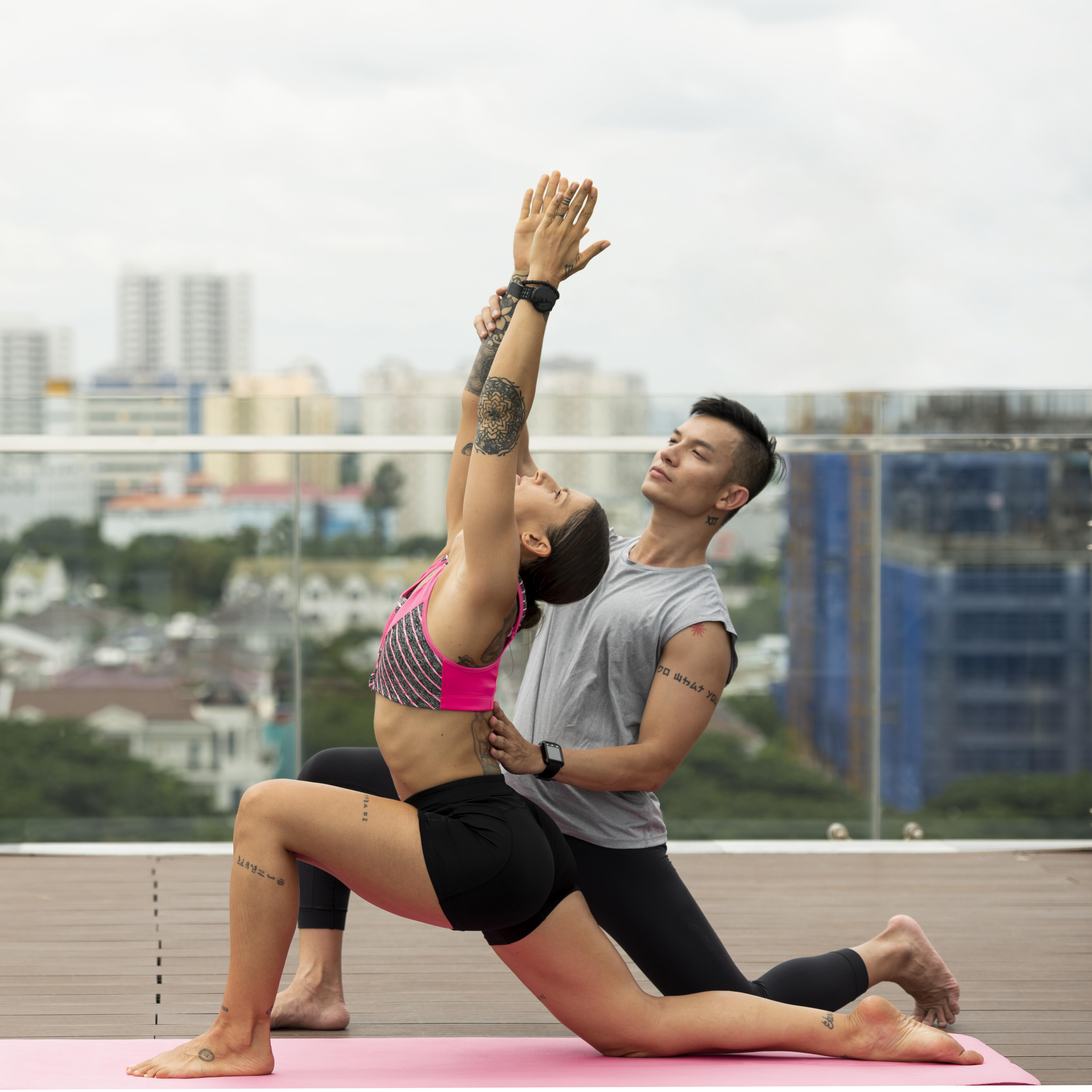
Teachers apply direct physical pressure to students to correct misalignments that verbal cues cannot fix. This practice requires strict adherence to physical boundaries and an exact understanding of directional force application. The practical examination tests the safe application of these hands-on modifications.
Evaluators test the application of downward manual pressure to the sacrum during resting postures and require instructors to provide physical stability to the hips during unilateral balancing exercises. Teachers also execute manual shoulder rotations to physically expand the anterior chest wall of the practitioner without compromising the cervical spine.
6. Business Operations and Studio Management
Certified instructors operate as independent contractors or studio employees within a competitive commercial market. Financial stability requires an exact understanding of client retention, schedule management, and liability insurance. Register for professional training at Vangmay Yoga to master yogic practices.
Trainees calculate specific profit margins for private individual instruction versus large group classes and draft legal liability waivers to secure legal protection before accepting new studio clients. Owners must also manage digital booking systems and verify automated payment gateways to maintain constant revenue flow.
7. Philosophical Framework and Textual Study
The physical practice operates within a historical system of mental regulation. Instructors study classical texts to understand the psychological objectives that the physical postures were originally designed to support.
The theoretical component demands the strict memorisation of specific concepts and historical timelines. Candidates memorise the operational definitions of the eight limbs of classical Ashtanga philosophy and test the practical application of these ethical guidelines within a commercial studio setting. Students also memorise the historical timeline tracking the exact development of modern Vinyasa flow sequences.
8. Practical Examination and Evaluation
The certification process concludes with a live teaching demonstration. Evaluators observe the candidate conducting a full-length class to verify their physical competence and command of the training room. This final assessment shows whether candidates can bring their technical knowledge, sequencing skills, and teaching approach together in a real class setting.
The grading rubric penalises specific instructional failures during this final evaluation. Evaluators deduct points if candidates lose the established count during repetitive bilateral sequences or fail to offer physical modifications for students with visible mobility restrictions. The grading board automatically fails candidates who exceed the strict time limit allocated for the scheduled class duration.
Conclusion
Completing a vinyasa yoga teacher certification in Bangalore provides the exact credentials required to enter the commercial fitness sector. The training converts personal physical competence into professional instructional capability through rigorous testing and systematic repetition.
Facility selection determines the technical quality of the graduating instructor. Contact Vangmay Yoga today to review the specific modules and secure a position in the next scheduled training cohort. It offers the best yoga teacher training at affordable prices.